A WordPress service page is one of the most important pages on a small business website. It is where search visitors decide whether your service matches their problem, whether they trust your company, and whether they should contact you, request a quote, book a call, or continue comparing options.
Many WordPress websites have weak service pages because they only describe the service in a few generic sentences. A page might say “we offer professional web design services” or “contact us for more information”, but it does not explain the problem, process, benefits, pricing logic, proof, FAQs, internal links, or next step clearly enough.
In this guide, you will learn how to optimize a WordPress service page for SEO using a clear page structure, focused keywords, search intent, helpful content, headings, FAQs, internal links, schema markup, trust signals, and strong CTA sections. If you are improving your full website structure, start with our WordPress SEO checklist for small business websites. You can also connect this guide with our upcoming WordPress internal linking strategy, WordPress schema markup guide, and website conversion optimization guide.
Table of Contents
- What Is a WordPress Service Page?
- Why Service Pages Matter for SEO
- WordPress Service Page SEO Structure
- 1. Choose One Main Service Keyword
- 2. Match the Page to Search Intent
- 3. Write a Clear SEO Title and Meta Description
- 4. Use a Strong H1 and Hero Section
- 5. Explain the Customer Problem
- 6. Present the Service Clearly
- 7. Show What Is Included
- 8. Add Proof, Examples and Trust Signals
- 9. Use FAQs to Answer Buyer Questions
- 10. Add Internal Links
- 11. Add Schema Markup
- 12. Use Strong CTA Sections
- WordPress Service Page SEO Best Practices
- Common Service Page SEO Mistakes
- WordPress Service Page SEO FAQ
- Conclusion
- Related Website Growth Guides
What Is a WordPress Service Page?
A WordPress service page is a dedicated page that explains one specific service your business offers. It should help the visitor understand what the service is, who it is for, what problem it solves, what is included, why your company is trustworthy, and what the visitor should do next.
For SEO, a service page is different from a homepage or a blog post. A homepage usually introduces the whole business. A blog post usually answers an informational question. A service page targets commercial search intent, where the visitor may be comparing providers, checking details, looking for pricing guidance, or getting ready to contact a company.
Examples of service pages include WordPress website design, WooCommerce development, website maintenance, SEO setup, local SEO services, landing page design, website speed optimization, copywriting services, social media management, consulting, installation services, repair services, and many other business offers.
- A homepage explains the whole business and links to the most important pages.
- A service page explains one service in detail and turns relevant visitors into leads.
- A blog post answers a question, teaches a topic, and supports related service pages with internal links.
- A landing page is often focused on one campaign, ad, offer, audience, or conversion goal.
A strong WordPress service page should not feel like a short brochure. It should feel like a helpful sales and SEO page that explains the service clearly enough for both users and search engines. The visitor should leave the page with fewer doubts, more trust, and a clear next step.
Why Service Pages Matter for SEO
Service pages matter for SEO because they give each important offer its own search target. If all services are only listed on one homepage, Google has less clear content to match with specific service searches. Visitors also have less information when they land on the page.
A dedicated service page can target one main keyword, answer related buyer questions, include examples and proof, link to supporting guides, and show a clear CTA. This makes the page more useful for users and easier for search engines to understand.
Specific search intent
A service page can target one clear commercial topic instead of forcing every service onto the homepage.
Better content depth
The page can explain the problem, solution, process, benefits, FAQs, proof and next step in detail.
Stronger internal links
Blog posts, case studies, related services and pillar guides can all link to the relevant service page.
Higher conversion focus
A service page can be designed around quote requests, calls, contact forms, bookings or consultations.
For example, a company that offers WordPress website design, WooCommerce development and SEO setup should usually have separate pages for each service. Each page can target different keywords, answer different questions, show different examples, and guide the visitor toward the right action.
This also supports the wider website structure. Your WordPress SEO checklist can link to service page SEO, your blog posts can support service pages, and your service pages can link to related guides, case studies and contact pages.
WordPress Service Page SEO Structure
A good WordPress service page should follow a clear structure. The exact design can change depending on the business, but the page should usually include a focused keyword, search-intent match, clear SEO title, strong H1, helpful hero section, problem explanation, service description, included features, trust signals, FAQs, internal links, schema markup, and CTA sections.
The structure below is designed for small business service pages that need to rank in Google and convert visitors into leads. You can use it for website services, local services, consulting, B2B services, repair services, installation services, design services, marketing services, maintenance services, and many other commercial pages.
12 sections to review on every important service page
Use this structure to make your service page clearer, more useful, more searchable and more conversion-focused.
Start by making the page specific. One service page should not try to rank for every service your company offers. Choose one primary service, match the page to the searcher’s intent, explain the offer clearly, and guide the visitor toward a focused next step.
1. Choose One Main Service Keyword
The first step in WordPress service page SEO is choosing one main service keyword. A service page should have a clear focus. If one page tries to target too many different services, the content becomes weaker, the search intent becomes unclear, and the page is harder to optimize.
For example, a page about WordPress website design should not also try to rank for WooCommerce development, SEO services, hosting, copywriting, logo design, and website maintenance at the same time. Those can be related services, but the main page should focus on one primary offer.
A good service keyword usually includes the service itself and sometimes a target audience, platform, location, or business type. For example, “WordPress website design”, “WooCommerce development services”, “WordPress SEO setup”, “local SEO services”, or “website maintenance for small businesses”.
One service page should focus on one main service keyword
Use the main keyword to guide the title, H1, intro, headings, content sections, internal links and CTA message.
WordPress website design
for small businesses
in Estonia or local city
custom WordPress websites
SEO-ready website structure
request a website quote
Once the main keyword is clear, use it naturally in the SEO title, H1, intro, relevant H2 sections, image alt text where appropriate, internal link anchor text, and CTA context. Do not repeat it unnaturally. The page should still read like a helpful service explanation written for real people.
- Choose one main service keyword for the page.
- Use related keywords to support the topic, not replace the main focus.
- Include the service keyword naturally in the title, H1 and intro.
- Use modifiers such as location, platform, audience or business type when they match the page.
- Do not optimize one page for unrelated services.
- Create separate pages for important services with different search intent.
2. Match the Page to Search Intent
Search intent is the reason behind the search. A person looking for a service page is usually not only looking for a definition. They may want to compare providers, understand what is included, check pricing, see examples, evaluate trust, or contact someone for help.
This is why a service page should not be written like a short dictionary explanation. It should match commercial intent. The visitor needs enough information to understand the offer and feel confident about taking the next step.
For example, someone searching for “WordPress SEO services” probably wants to know what the service includes, whether technical SEO is covered, whether service pages will be optimized, whether schema markup is included, how long the work takes, and how to request a quote.
Match the page to what the visitor needs before contacting you
A service page should answer buyer questions, reduce doubt and make the next step obvious.
What is this service and what does it include?
Is this the right service provider for my problem?
How is this service different from other options?
Can I see proof, reviews, examples or experience?
What affects the price or how do I request a quote?
How do I contact, book, call or start the process?
Search intent should also affect the CTA. If the visitor is researching a complex service, a “Request a Free Consultation” CTA may work better than “Buy Now”. If the visitor is looking for a local emergency service, a phone call CTA may be more important than a long form.
- Check what the searcher likely wants before contacting a company.
- Answer questions about scope, process, price, results and next steps.
- Use examples and proof when the service requires trust.
- Make the CTA match the visitor’s stage of decision-making.
- Do not write a service page as if it were only a blog definition.
3. Write a Clear SEO Title and Meta Description
The SEO title and meta description are important because they shape how the service page appears in search results. A clear title helps searchers understand the page topic quickly. A useful meta description gives them a reason to click.
For a WordPress service page, the SEO title should usually include the service keyword, a business or audience modifier, and sometimes the brand name. The meta description should explain what the service helps with and what the visitor can expect from the page.
Here are a few examples of stronger SEO titles for service pages:
- Weak: Services
- Better: WordPress Website Design for Small Businesses
- Weak: Web Design
- Better: Custom WordPress Web Design Services for Business Websites
- Weak: SEO Service
- Better: WordPress SEO Setup Services for Small Business Websites
Meta descriptions should not simply repeat the title. Use them to clarify the value of the page. Mention the service, the benefit, and the kind of help the visitor can get.
4. Use a Strong H1 and Hero Section
The H1 and hero section are the first things many visitors see after opening a service page. They should immediately confirm that the visitor is in the right place. A vague hero section can make people leave before they read the rest of the page.
A strong service page hero should include a clear H1, a short value-focused introduction, one primary CTA, and sometimes a secondary CTA. It can also include trust signals such as reviews, experience, project count, client type, location, or a short result-focused statement.
Professional Digital Solutions
We provide high-quality services for modern businesses. Contact us for more information.
WordPress Website Design for Small Businesses
Get a fast, SEO-ready WordPress website with clear service pages, mobile-friendly design and a structure built to generate more leads.
Request a Quote- Use one clear H1 that includes the service keyword naturally.
- Explain the value of the service in the first paragraph.
- Add a clear CTA above the fold.
- Use a secondary CTA only if it helps, such as “View Portfolio” or “See Pricing”.
- Add trust signals near the hero when they support the decision.
- Avoid vague phrases that do not explain the actual service.
Make your service pages easier for search engines and AI systems to understand
EntitySchema Pro helps you add entity-based structured data to WordPress, improve semantic clarity, and build stronger SEO signals for important business pages.
5. Explain the Customer Problem
A good service page should show that you understand the customer’s problem before you present your solution. This is important for SEO and conversions because visitors are usually not looking for a service name only. They are looking for a way to solve a business problem, technical issue, sales problem, time problem, trust problem, or growth problem.
For example, a business owner may not only want “WordPress SEO”. They may want more leads, better Google visibility, faster pages, clearer service pages, improved schema markup, better local visibility, or a website that finally explains the company properly.
We offer professional SEO services for companies. Contact us today.
Your WordPress website may look good, but still fail to generate leads if service pages are too thin, page speed is poor, schema markup is missing, headings are unclear, and visitors do not know what to do next.
The problem section does not need to be negative or dramatic. It should simply make the visitor feel understood. When the page explains the problem accurately, the service explanation becomes more believable.
- Describe the real problem the service solves.
- Connect the problem to the visitor’s business goal.
- Avoid vague claims that could apply to any service.
- Explain why the problem matters now.
- Use examples that match the customer’s situation.
- Make the transition from problem to solution natural.
6. Present the Service Clearly
After the page explains the customer problem, it should present the service clearly. This section should answer what the service is, what you do, how it helps, who it is for, and what the visitor can expect.
Do not assume that visitors understand your process. A service page should make the offer easy to understand without requiring the visitor to call first. If the page is too vague, people may compare you with another provider who explains the service better.
Explain the service in plain language
A strong service page makes the offer clear before asking the visitor to contact you.
Describe the actual work included in the service.
Explain which businesses, websites or customers this service helps.
Connect the service to visibility, leads, speed, conversions, sales or trust.
Give a simple overview of the process or next steps.
List the main deliverables, sections, checks, setup items or support tasks.
Tell visitors what happens after they request a quote, book a call or send a form.
A clear service explanation also helps SEO because it gives search engines more context about the page. Instead of repeating a keyword, explain the service from several useful angles: the problem, the process, the benefits, the deliverables, the audience, the proof, and the next action.
- Explain the service in simple language.
- Show who the service is for.
- Describe what the service includes.
- Connect the service to a real business result.
- Use specific details instead of generic claims.
- Make the CTA feel like the natural next step.
7. Show What Is Included
A strong WordPress service page should clearly show what is included in the service. This helps visitors understand the value, compare options, and decide whether the service matches their needs. It also helps search engines understand the page in more detail.
Many service pages stay too vague. They say that the company offers a service, but they do not explain what the customer actually receives. A better page breaks the service into clear deliverables, steps, checks, features, support items, or outcomes.
Show what the customer actually gets
A clear included section reduces confusion, supports SEO, and makes the offer easier to compare.
Review the current page, website structure, content gaps, keyword focus and conversion flow.
Choose the main service keyword and related supporting terms for the page.
Plan the H1, hero, problem section, service explanation, proof, FAQs and CTA areas.
Rewrite weak service content so it is clearer, more specific and more useful for visitors.
Add contextual links to related services, supporting guides, case studies and contact pages.
Add structured data where it fits the visible content and the page purpose.
The included section should be specific to the service. A WordPress SEO service page may include keyword mapping, title optimization, service page structure, internal links, schema markup, Search Console setup and technical checks. A website design service page may include design planning, mobile layout, WordPress setup, page templates, contact forms, speed basics and SEO-ready structure.
- List the main deliverables included in the service.
- Explain what each included item means in plain language.
- Use specific service details instead of generic benefits only.
- Show optional extras separately if they are not part of the main service.
- Connect included items to real business value.
- Make the section easy to scan on mobile.
8. Add Proof, Examples and Trust Signals
Trust is essential on a service page. A visitor may understand the service, but still hesitate if the page does not show proof. Proof helps the visitor believe that your company can actually deliver the result you describe.
Proof can take many forms: portfolio examples, screenshots, case studies, reviews, testimonials, before-after improvements, certifications, years of experience, client logos, process screenshots, project photos, result summaries, or clear company details.
Show why visitors should trust the service
Service pages should support claims with proof, examples, experience and visible credibility signals.
Show completed projects, screenshots, website links or visual examples of your work.
Add real customer feedback that supports the service and reduces doubt.
Explain the problem, work completed and result achieved for previous clients.
Show how your process works so the visitor knows what happens after contact.
Use real business information, contact details, team details or experience indicators.
Use measurable results when they are accurate and can be explained responsibly.
Trust signals should be placed where they help the decision. A testimonial can work after the service explanation. Portfolio examples can support the proof section. A case study can be linked from the service page. A short “why choose us” section can help near the CTA.
- Add testimonials or reviews that match the service.
- Show portfolio examples when visual proof matters.
- Use case studies for complex or higher-value services.
- Explain your process so visitors know what to expect.
- Show real company information and contact details.
- Do not make exaggerated claims without proof.
9. Use FAQs to Answer Buyer Questions
FAQs are useful on service pages because they answer questions that visitors may ask before contacting you. They can reduce hesitation, support long-tail SEO, improve content depth, and make the page more helpful.
A good service page FAQ should focus on real buyer questions. It should not be used only to add more keywords. Think about what people usually ask during calls, emails, quote requests or sales conversations.
Answer questions before visitors need to ask them
Use FAQs to support buyers who are comparing services, checking details or getting ready to contact you.
Explain the scope of the service and what the customer receives.
Give pricing guidance or explain what affects the quote.
Share a realistic timeline or describe the main project stages.
Clarify which businesses, websites or situations are the best fit.
Explain what the customer should prepare before starting.
Describe the next step so the CTA feels easier to click.
FAQs can also support internal links. For example, if a question mentions website speed, you can link to a WordPress Core Web Vitals guide. If a question mentions structured data, you can link to a WordPress schema markup guide. If the visitor needs a full SEO overview, you can link back to the WordPress SEO checklist.
- Use FAQs to answer real buyer questions.
- Keep answers clear and practical.
- Use FAQ questions that match the service page topic.
- Add internal links only where they help the reader.
- Avoid repeating the same keyword in every FAQ answer.
- Make sure FAQ content matches the visible service offer.
10. Add Internal Links
Internal links are important for service page SEO because they connect the service page with the rest of the website. A strong service page should not stand alone. It should receive links from the homepage, related service pages, blog posts, case studies, category pages and relevant guides.
Internal links help users discover related information and help search engines understand which pages are important. For small business websites, internal links can also connect informational content to commercial pages, which helps blog traffic support real business goals.
Connect service pages to the rest of the website
Use contextual links to support the service page and guide visitors toward helpful next steps.
The main commercial page for one clear service keyword and offer.
Links to the most important services and explains the business overview.
Answer questions and link back to the relevant service page.
Show proof and link to the service used in the project.
Help visitors compare connected offers and move between service pages.
Receives users when they are ready to request a quote or start a conversation.
Use descriptive anchor text when linking to service pages. Instead of “click here”, use natural phrases such as “WordPress SEO setup services”, “website conversion optimization”, “WordPress service page SEO”, or “small business website design”.
- Link from the homepage to important service pages.
- Link from blog posts to relevant service pages.
- Link from service pages to related services.
- Link from service pages to case studies and proof pages.
- Link from FAQs to deeper guides when it helps the reader.
- Use descriptive anchor text that explains the linked page.
- Update older posts when new service pages are published.
11. Add Schema Markup
Schema markup helps search engines understand the meaning of a service page more clearly. For a WordPress service page, structured data can help describe the business entity, page content, breadcrumbs, FAQs, articles, products, reviews, or local business information depending on the page and visible content.
Schema should support the content, not replace it. The visible page still needs clear service information, helpful headings, proof, FAQs, internal links and calls to action. Structured data should be accurate and should match what is actually shown on the page.
Make the service page easier to understand
Use accurate schema markup to support your business, page structure, FAQs, breadcrumbs and service-related content.
Connect the service page to the company entity, name, logo, website and profiles.
Useful when the service is connected to a local business, address or service area.
Helps describe the page path and how the service page fits inside the website.
Can support visible FAQ content when the questions and answers are actually on the page.
May help describe the service offer when implemented carefully and accurately.
Useful for describing the page type, main topic and content relationship.
For service pages, schema markup is especially useful when the website has a clear business entity, local business information, FAQ content, breadcrumbs and related website structure. You can learn more in our upcoming WordPress schema markup guide.
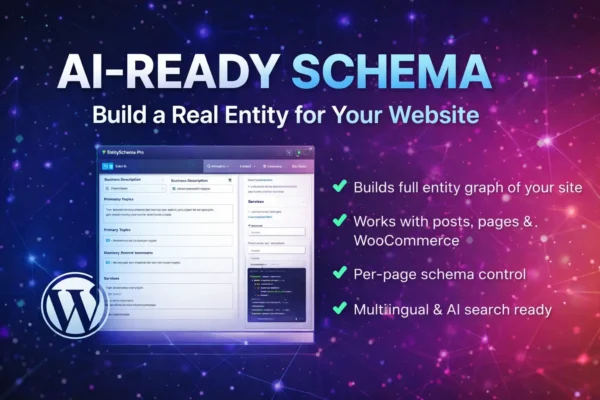
Add structured data to your WordPress service pages
EntitySchema Pro helps you create entity-based structured data for WordPress, so important service pages become easier for search engines and AI systems to understand.
- Use structured data that matches visible page content.
- Add Organization or LocalBusiness schema when relevant.
- Use BreadcrumbList schema to support website structure.
- Add FAQPage schema only when the FAQ content is visible on the page.
- Keep schema accurate and avoid unsupported claims.
- Test important structured data after implementation.
12. Use Strong CTA Sections
A service page should guide the visitor toward the next step. If the page explains the service well but the CTA is weak or hidden, the visitor may leave without contacting you. Strong CTA sections help turn service page traffic into leads, bookings, calls or quote requests.
The CTA should match the service and the visitor’s decision stage. For a complex B2B service, “Request a Consultation” may work better than “Buy Now”. For a local service, “Call Now” may be important. For a web design or SEO service, “Request a Quote” or “Book a Free Call” can feel natural.
Make the next step clear
A service page should include calls to action in the hero, middle of the page and final section.
Place the main action near the top of the page so ready visitors can act quickly.
Add a CTA after the service explanation, included section or proof section.
Use a soft CTA after answering common buyer questions.
End the page with a clear reason to contact, book, request or start.
A CTA should not only say “Contact us”. It should explain why the visitor should act now and what happens next. For example: “Request a WordPress SEO quote and we will review your service page structure, content, internal links and schema opportunities.”
- Place a CTA near the top of the service page.
- Repeat the CTA after important persuasion sections.
- Use action text that matches the service, such as Request a Quote or Book a Call.
- Explain what happens after the visitor contacts you.
- Make forms short and easy to complete.
- Check that CTA buttons are easy to tap on mobile.
We will cover service page conversion flow in more detail in the upcoming website conversion optimization guide for small businesses.
WordPress Service Page SEO Best Practices
WordPress service page SEO works best when the page is built around one clear service, one clear search intent, and one clear next step. The page should not only mention the service keyword. It should explain the service well enough for visitors to understand the offer, trust the company, and take action.
A strong service page combines SEO structure and sales structure. It needs a focused keyword, clear H1, helpful content sections, trust signals, internal links, schema markup, FAQs, and CTA sections. When all of these parts work together, the page becomes more useful for users and easier for search engines to understand.
Build service pages that rank and convert
Use these best practices to make your WordPress service pages clearer, more useful and more focused on real business results.
Focus the page on one main service keyword and support it with related terms.
Answer the questions visitors need before they contact, compare or request a quote.
Explain what is included, who it is for, what it solves and how the service works.
Use testimonials, examples, case studies, project screenshots, reviews and real company details.
Connect the service page to related guides, service pages, case studies and contact pages.
Use clear CTA sections so visitors know how to request a quote, book a call or contact you.
- Give every important service its own dedicated page.
- Use one primary keyword for each service page.
- Make the H1 clear, specific and service-focused.
- Explain the customer problem before presenting the solution.
- Show what is included in the service.
- Add proof such as testimonials, examples, case studies or portfolio links.
- Use FAQs to answer real buyer questions.
- Add internal links to related services, guides and contact pages.
- Use schema markup only when it matches visible page content.
- Place CTA sections where visitors naturally need the next step.
Common Service Page SEO Mistakes
Many WordPress service pages fail because they are too vague. They mention the service, but they do not explain the value, process, proof, FAQs, internal links or next step. This creates a page that is weak for both search visibility and conversions.
The most common mistake is thinking that a service page only needs a title, a short paragraph and a contact button. A service page should help the visitor make a decision. If the page does not answer enough questions, the visitor may leave and choose a competitor with a clearer page.
Avoid these service page SEO problems
These issues can make a service page harder to rank, harder to trust and harder to convert.
One page should not try to rank for every service your company offers.
Phrases like “high-quality solutions” do not explain the real service or value.
If the page does not answer pricing, scope, process and trust questions, visitors may leave.
Service pages need links from the homepage, blog posts, related services and guides.
Claims are weaker when the page does not show testimonials, portfolio work or case studies.
A hidden or generic CTA can reduce quote requests, calls, bookings and form submissions.
- Using the same page for many different services.
- Writing only a short generic service description.
- Using a vague H1 that does not include the actual service.
- Forgetting to explain the customer problem.
- Not showing what is included in the service.
- Missing FAQs that answer real buyer questions.
- Not adding proof, examples, reviews or case studies.
- Not linking from blog posts to the service page.
- Adding schema markup that does not match visible content.
- Using only one weak “Contact Us” button at the bottom of the page.
WordPress Service Page SEO FAQ
Here are common questions about optimizing WordPress service pages for SEO, better structure and stronger conversions.
A WordPress service page is a dedicated page that explains one specific service your business offers. It should describe the problem, solution, included items, proof, FAQs, internal links and CTA so visitors can understand the service and take the next step.
Choose one main service keyword, match the page to search intent, write a clear SEO title and H1, explain the customer problem, show what is included, add proof, answer FAQs, use internal links, add accurate schema markup and include strong CTA sections.
Important services should usually have their own pages. A dedicated service page can target a clearer keyword, answer more specific buyer questions, include relevant proof and guide visitors toward a focused CTA.
A service page should include a clear H1, useful intro, customer problem, service explanation, included items, process, proof, FAQs, internal links, schema markup where relevant and strong CTA sections.
A service page should be long enough to answer the visitor’s main questions and explain the offer clearly. For important services, a short paragraph is usually not enough. The page should cover the problem, solution, scope, proof, FAQs and next step without adding filler.
FAQs are useful because they answer buyer questions before contact. They can cover scope, pricing, timing, process, requirements, results and what happens after the visitor requests a quote.
Schema markup can help search engines understand a service page more clearly when it matches the visible content. Useful schema may include Organization, LocalBusiness, BreadcrumbList, FAQPage, WebPage or related structured data depending on the page.
A service page should usually include a CTA near the top, one or more supporting CTAs after important sections, and a strong final CTA. The exact number depends on page length and user intent.
Internal links help users and search engines understand how the service page connects to the rest of the website. Blog posts, homepage sections, related services and case studies can all link to the service page to support visibility and conversions.
Conclusion
A WordPress service page should do more than describe a service. It should help the right visitor understand the offer, trust the company, compare the solution, answer important questions and take the next step.
Start with one clear service keyword and one clear search intent. Then build the page with a strong SEO title, focused H1, clear hero section, customer problem, service explanation, included items, proof, FAQs, internal links, schema markup and CTA sections.
When a service page is structured properly, it becomes stronger for both SEO and conversions. It can rank for more relevant searches, support your internal linking strategy, help visitors make a decision and turn organic traffic into real business enquiries.
Want to improve your WordPress service page structure?
EntitySchema Pro helps you add entity-based structured data to WordPress, improve semantic clarity and make important business pages easier for search engines and AI systems to understand.
Related Website Growth Guides
This service page SEO guide is part of the Website Growth series. The related guides below help you improve WordPress SEO, page structure, internal linking, schema markup, performance, local SEO, WooCommerce visibility and conversions.