Local SEO for WordPress websites helps small businesses appear in local search results when people look for services, products, shops, offices, contractors, restaurants, clinics, agencies or service providers near them. A good WordPress website can support local visibility by showing clear business details, service areas, location pages, reviews, internal links, schema markup and contact information.
Many small business websites miss local SEO opportunities because the website and Google Business Profile are not connected clearly. The business name, address, phone number, service areas, opening hours, reviews, local pages and structured data may be incomplete, inconsistent or hard to find. This makes it harder for both users and search engines to understand where the business works and what it offers.
In this guide, you will learn how to improve local SEO for WordPress websites using Google Business Profile, consistent NAP details, local business information, useful location pages, local service page optimization, LocalBusiness schema markup, reviews, internal links, maps, images and performance tracking. If you are improving your full website SEO foundation, start with our WordPress SEO checklist for small business websites. If your local pages are slow, also review our WordPress Core Web Vitals guide.
Table of Contents
- What Is Local SEO for WordPress Websites?
- Why Local SEO Matters for Small Business Websites
- Local SEO for WordPress Websites Checklist
- 1. Set Up or Improve Google Business Profile
- 2. Keep NAP Details Consistent
- 3. Add Local Business Information to WordPress
- 4. Create Useful Location Pages
- 5. Optimize Service Pages for Local Intent
- 6. Add LocalBusiness Schema Markup
- 7. Collect and Display Customer Reviews
- 8. Use Local Internal Links
- 9. Add Maps, Contact Details and Opening Hours
- 10. Optimize Images for Local SEO
- 11. Track Local SEO Performance
- 12. Avoid Local SEO Spam and Doorway Pages
- Local SEO Best Practices for WordPress
- Common Local SEO Mistakes
- Local SEO for WordPress Websites FAQ
- Conclusion
- Related Website Growth Guides
What Is Local SEO for WordPress Websites?
Local SEO for WordPress websites is the process of improving your website and local business presence so people can find your business when they search for nearby services, local companies, service areas, opening hours, directions, reviews or contact details.
For a WordPress website, local SEO usually includes clear business information on the site, optimized service pages, useful location pages, local internal links, local business schema, review signals, map and contact details, image optimization, Google Search Console data and a well-managed Google Business Profile.
Local SEO is different from general SEO because the searcher often wants a business that works in a specific area. They may search for a service plus city, a product near them, a company with good reviews, a phone number, opening hours, driving directions or a service provider that can visit their location.
- General WordPress SEO improves the whole website structure, content, speed, schema and technical foundation.
- Service page SEO improves one service page so it can rank and convert better.
- Core Web Vitals improve loading, responsiveness and visual stability.
- Local SEO connects the website with business location, service areas, reviews, Google Business Profile and local search intent.
A strong local SEO setup should make it easy for people and search engines to answer these questions: who is the business, what does it offer, where does it work, how can customers contact it, what do customers say about it, and which pages explain the local services in detail?
Why Local SEO Matters for Small Business Websites
Local SEO matters because many small business searches have local intent. A person may not want a global article or a random company from another country. They may want a local plumber, web designer, clinic, restaurant, construction company, shop, consultant, repair service, beauty salon, accountant, lawyer, agency or installer.
For small business websites, local SEO can support phone calls, quote requests, store visits, bookings, map views, direction requests, form submissions and customer trust. A clear WordPress website helps the local listing by giving customers deeper information after they click from search or Google Business Profile.
Local intent is specific
People often search for services in a city, region or service area instead of generic information.
Trust matters quickly
Reviews, contact details, business information and proof can help visitors decide faster.
Google Business Profile needs support
Your WordPress website should support the same services, details, locations and contact flow.
Local pages can convert
Useful location and service pages can turn local visitors into calls, bookings, visits or quote requests.
A local SEO strategy should not rely on Google Business Profile alone. Your WordPress website should also explain your services, show local trust signals, include clear contact details, answer local customer questions and support the same business information that appears across your online presence.
Useful free tools for this work include Google Business Profile, Google Search Console, Google Rich Results Test and PageSpeed Insights. These are not replacements for good website content, but they help you manage visibility, test structured data and check performance.
Local SEO for WordPress Websites Checklist
This local SEO checklist is designed for WordPress websites that need better visibility in local search, stronger Google Business Profile support, clearer local pages, more trust signals, better contact flow and more useful local business information.
The checklist covers the most important local SEO areas: Google Business Profile, NAP consistency, local business details on WordPress, useful location pages, local service intent, LocalBusiness schema, customer reviews, internal links, maps, opening hours, image optimization, tracking and avoiding spammy local SEO tactics.
12 areas to review on local WordPress websites
Use this checklist to improve local visibility, trust, service-area clarity and conversion paths for nearby customers.
Start with the business information first. Local SEO becomes weak when basic details are unclear or inconsistent. Before creating many location pages or adding advanced schema, make sure the business name, contact details, service areas, opening hours, website pages and Google Business Profile information are accurate and useful.
1. Set Up or Improve Google Business Profile
Google Business Profile is one of the most important parts of local SEO for WordPress websites. Your website can explain services in detail, but your Google Business Profile helps customers find your business in local search, maps and branded searches.
A strong local SEO setup should connect your WordPress website and Google Business Profile clearly. The business name, website URL, phone number, address, service areas, opening hours, categories, services, photos and reviews should support the same business identity.
Keep your local business profile accurate and useful
Your Google Business Profile should match your WordPress website and help local customers understand what you offer.
Use the real business name customers know. Do not stuff keywords into the name.
Choose the most accurate main category for the business, not the broadest possible category.
Add services that match your real offer and connect them to relevant website pages.
Keep normal hours and holiday hours updated so customers do not get wrong information.
Add useful photos of the business, work, team, products, location or completed projects.
Link to the most useful page, usually the homepage or a strong local landing page.
You can manage this through Google Business Profile. The goal is not to fill every field with keywords. The goal is to give accurate information that helps customers choose, contact and visit your business.
- Claim and verify the business profile.
- Choose the most accurate primary business category.
- Add real services that match your WordPress service pages.
- Keep phone number, address, website URL and opening hours updated.
- Add photos that help customers understand the business.
- Use the same business identity on the website and Google Business Profile.
- Avoid keyword stuffing in the business name or service descriptions.
2. Keep NAP Details Consistent
NAP means name, address and phone number. For local SEO, these details should be consistent across your WordPress website, Google Business Profile, social profiles, directories and other important business listings.
Consistency helps users trust the information they find. It also helps search engines connect your website, business profile and external business mentions more clearly. If your phone number, address, opening hours or business name are different across platforms, customers can become confused.
Use the same business details everywhere important
Local SEO becomes stronger when customers can find the same core business information on your website and business profiles.
Use the real business name consistently on the website, business profile and citations.
Use the same address format where the physical location is public and relevant.
Use a working phone number that matches your contact page and business profile.
Keep normal hours, holiday hours and special closures updated.
Point users to a useful page that matches the business and local search intent.
Describe real service areas without pretending to have offices where you do not.
NAP consistency does not mean every listing must look visually identical, but the key business details should not conflict. If the business moved, changed phone numbers or updated opening hours, update the website and the most important profiles first.
- Use the same official business name on important platforms.
- Keep address and phone details consistent where they are public.
- Update opening hours on the website and Google Business Profile.
- Make phone numbers clickable on mobile.
- Check footer, contact page, schema markup and business profile details.
- Do not create fake locations or fake addresses for local SEO.
3. Add Local Business Information to WordPress
Your WordPress website should clearly show local business information in places where customers expect it. The contact page is the most obvious place, but important details can also appear in the footer, homepage, service pages, location pages and structured data.
This information should help real users. A visitor should not need to search for your phone number, opening hours, address, service area or contact form. If local customers cannot quickly understand whether you serve their area, the page may lose leads.
Make local business information easy to find
Important local details should be visible to users and consistent with Google Business Profile.
Add phone, email, address, map, opening hours and a simple contact form.
Show key contact details and service areas where it helps users on every page.
Explain the main location, service area or local audience when it matters.
Mention local availability naturally when the service depends on location.
Use them for real local value, not duplicated pages with only city names changed.
Use LocalBusiness or Organization schema when it matches the visible business information.
- Add clear contact details to the contact page.
- Show important business details in the footer when useful.
- Mention service areas naturally on relevant pages.
- Add opening hours where customers need them.
- Make phone, email and form actions easy to use on mobile.
- Match visible business details with structured data where relevant.
4. Create Useful Location Pages
Location pages can help local SEO when they provide real value. A useful location page explains the services available in a specific city, area or region, adds local context, answers local customer questions and guides visitors toward contacting the business.
The problem is that many websites create thin location pages only by changing the city name. These pages often have almost identical content and do not help users. Search engines may treat them as low-value doorway pages if they exist only to capture local keywords without useful content.
One duplicated template copied across many cities with only the city name changed and no real local details.
A useful local page with real service details, local examples, service area information, FAQs, reviews, contact details and a clear CTA.
Location pages should be created only when they can be genuinely useful. For example, a business may create location pages for real offices, main service areas, cities with completed projects, or regions where the service process, delivery, availability or customer questions are different enough to explain.
- Create location pages only when they provide real local value.
- Write unique content for each important location page.
- Add local service details, examples, FAQs and contact information.
- Link location pages from relevant service pages and navigation areas.
- Avoid creating many near-duplicate pages with only city names changed.
- Do not claim physical offices in places where the business does not have one.
Add LocalBusiness schema to support your local SEO structure
EntitySchema Pro helps you add entity-based structured data to WordPress, including business, website, page, FAQ and local context where it matches the visible content.
5. Optimize Service Pages for Local Intent
Local SEO does not always require a separate location page for every search. Sometimes the best page is a strong service page that naturally includes local intent. For example, a “WordPress website design” service page can mention the business location, target region or service area when that information helps customers.
The key is to keep the service page useful. Do not force city names into every heading. Instead, explain the service clearly, show who it is for, include local trust signals where relevant, and guide local visitors toward the next step.
Connect service pages with real local relevance
Service pages can support local SEO when location information helps the visitor understand availability, trust and next steps.
Mention the city, region or service area only when it naturally fits the service offer.
Use local projects, testimonials, photos or examples when they support trust.
Explain where you work, deliver, visit, consult or provide the service.
Answer questions about availability, travel, delivery, appointment areas or local process.
Link to relevant location pages, case studies, contact page and supporting guides.
Use a CTA that fits local intent, such as call, request a quote, book or ask about availability.
If you need a deeper service page structure, use the WordPress service page SEO guide. For local SEO, the service page should combine a focused service offer with clear local relevance where it helps the user.
- Use local terms naturally, not in every sentence.
- Make the service keyword and local intent work together.
- Add local proof such as reviews, examples or service area details.
- Link to useful location pages when they exist.
- Use local FAQs only when they answer real customer questions.
- Make the CTA match the local action users may want to take.
6. Add LocalBusiness Schema Markup
LocalBusiness schema markup helps describe local business information in a structured way. It can support details such as business name, address, phone number, opening hours, website, logo, business type, service area and related entity information when it matches the visible content on the website.
Schema markup should not be used to invent information that is not visible or true. If your WordPress website says one thing and your structured data says another, the setup becomes less reliable. The best schema supports the real content users can already see on the page.
Describe your local business with accurate structured data
Schema markup can support local SEO when it matches visible business information and the real website structure.
Name, logo, website and organization details should match the visible business information.
Add address or service area details only when they are accurate and relevant.
Phone, email and contact page information should match the website and business profile.
Use accurate opening hours when the business has hours customers need to know.
BreadcrumbList schema can help describe how local pages fit inside the website.
FAQPage schema can support visible local FAQ content when the page includes real questions and answers.
After adding schema markup, test important pages with the free Google Rich Results Test. For a deeper schema setup, read the upcoming WordPress schema markup guide.
- Add LocalBusiness schema only when it matches the real business.
- Keep business details consistent with the website and Google Business Profile.
- Use BreadcrumbList schema for website structure.
- Add FAQPage schema only when FAQs are visible on the page.
- Test schema with Google Rich Results Test.
- Avoid adding fake reviews, fake locations or unsupported claims in structured data.
7. Collect and Display Customer Reviews
Customer reviews are important for local SEO because they help people decide whether they can trust your business. Reviews can support your Google Business Profile, service pages, location pages, homepage and conversion sections on your WordPress website.
A review strategy should be honest and consistent. Ask real customers for reviews after completed work, good service experiences or successful projects. Do not buy fake reviews, write reviews for yourself, or add review markup for reviews that are not visible on the page.
Use real customer feedback to build local trust
Reviews help local visitors compare businesses, understand customer experience and feel safer before contacting you.
Encourage real customers to leave honest feedback on your Google Business Profile.
Show useful review snippets on service pages, location pages and the homepage.
Use reviews that mention the service, location, result or customer experience when relevant.
Ask at the right moment, usually after the customer has received value from the service.
Reply professionally to reviews and show that the business is active and customer-focused.
Use only real reviews and avoid fake ratings, copied testimonials or unsupported claims.
Reviews can also support conversion. A visitor may find your business through local search, click to your WordPress website, read a service page, check customer feedback and then decide to call or request a quote. This is why reviews should not only live on external platforms. Useful testimonials can also support your website pages.
- Ask real customers for honest reviews after completed work.
- Display relevant testimonials on service and location pages.
- Use reviews that mention real service experience when possible.
- Respond to reviews professionally.
- Do not use fake reviews or fake ratings.
- Do not add review schema unless the review content is visible and accurate.
8. Use Local Internal Links
Internal links help users and search engines understand how your local pages, service pages, homepage, contact page, blog posts and reviews connect. A local SEO page should not stand alone. It should be part of a clear WordPress website structure.
For example, a local service page can link to the contact page, relevant location page, customer reviews, case studies, service area information and supporting blog guides. Blog posts can also link back to local service pages when the reader may need help from a local provider.
Connect local pages with services, proof and contact actions
Internal links help local visitors move from information to trust and then to the right conversion page.
The main page for a service with local relevance, proof and a clear CTA.
Links to the most important services, locations and contact options.
Explains services, availability, local details and customer questions for one area.
Supports trust with customer feedback, testimonials and proof sections.
Answer related questions and link back to the most relevant service page.
Gives visitors the next step with phone, form, map, email and opening hours.
Use descriptive anchor text for local internal links. Instead of generic text such as “read more”, use natural anchor text that explains the destination, such as “local SEO service page”, “WordPress website design in Tallinn”, “contact our team”, or “website maintenance for small businesses”.
- Link from the homepage to important local service pages.
- Link from service pages to relevant location pages.
- Link from blog posts to related local service pages.
- Link from location pages to reviews, contact details and service pages.
- Use descriptive anchor text that helps users understand the linked page.
- Do not create random internal links only for SEO if they do not help the reader.
9. Add Maps, Contact Details and Opening Hours
Local visitors often want practical details quickly. They may need your phone number, address, directions, opening hours, parking information, service area, email, contact form or booking link. These details should be easy to find on your WordPress website.
The contact page is usually the main place for this information, but key details can also appear in the footer, homepage, location pages and local service pages. The goal is to reduce friction. A local visitor should not need to search through the whole site to understand how to contact or visit the business.
Call, visit or request a quote
Phone, opening hours, map, address and service area should be simple on mobile.
Contact BusinessMake practical business details easy to use
- Clickable phone number on mobile.
- Accurate address or service area.
- Opening hours and holiday hours.
- Map or directions where useful.
- Short contact form or booking option.
- Email, quote request or consultation CTA.
If you embed a map, make sure it helps the visitor. A map can be useful for a physical location, but it may be less useful for a fully remote service business. Also remember that embedded maps can add extra scripts, so check performance with PageSpeed Insights if the page becomes slow.
- Add phone, email, address and opening hours to the contact page.
- Make phone numbers clickable on mobile devices.
- Add a map when directions or physical location matter.
- Explain service areas clearly for businesses that visit customers.
- Keep opening hours consistent with Google Business Profile.
- Check that maps and embeds do not slow down important pages too much.
10. Optimize Images for Local SEO
Images can support local SEO by showing real business proof. Photos of the location, team, projects, products, vehicles, service work, before-and-after examples, shop interior or completed installations can help visitors understand and trust the business.
Image optimization also matters because large images can slow down WordPress pages. Local pages should not use huge uncompressed photos that hurt mobile speed. A useful local image should be properly sized, compressed, described with accurate alt text and placed where it supports the page.
Use real images that support trust and performance
Local images can show proof, location, services and projects while still keeping WordPress pages fast.
Use actual business, project, team, product or location photos when they support trust.
Rename important images before uploading, using clear and natural filenames.
Describe the image accurately when it adds meaning to the page.
Reduce image file size before uploading to avoid slow mobile pages.
Do not upload huge originals if the page only shows a smaller image.
Use project photos, office photos or service photos to support local credibility.
- Use real local business photos where possible.
- Rename important image files before uploading.
- Add descriptive alt text when the image is meaningful.
- Compress images before they slow down local pages.
- Use correct dimensions and responsive images.
- Avoid stock photos when real local proof would be stronger.
Add entity-based schema to local WordPress pages
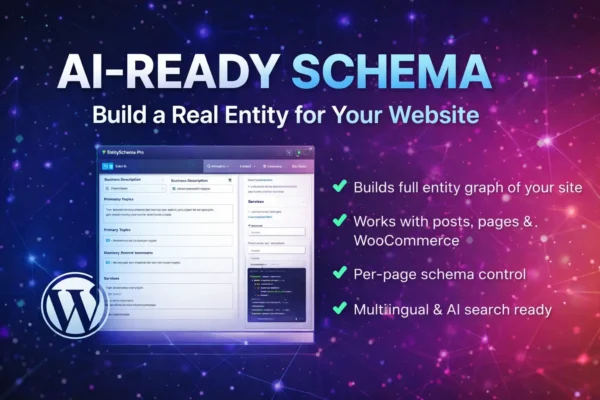
EntitySchema Pro helps you build structured data for WordPress, including business, page, FAQ and local context when it matches your visible content.
11. Track Local SEO Performance
Local SEO should be measured. A WordPress website may receive more impressions, but you still need to know which pages get clicks, which local queries bring visitors, which pages generate calls or forms, and whether users are finding the right service or location information.
Use Google Search Console to review search queries, pages, clicks, impressions and average positions. Use Google Business Profile performance data to understand how people find and interact with your business listing. Use analytics or conversion tracking to measure real actions such as forms, calls, bookings or quote requests.
Measure local visibility and real business actions
Local SEO is stronger when you can see which pages, queries and actions actually bring useful traffic.
Review local keywords, service terms, branded searches and location-based queries.
Check which service pages, location pages and blog posts bring local organic traffic.
Review calls, website clicks, direction requests and profile interactions where available.
Track quote requests, consultation forms, bookings and important lead actions.
Track mobile phone clicks when calls are an important local conversion.
Use Rich Results Test to check whether important structured data is valid.
- Use Google Search Console to monitor local queries and pages.
- Review Google Business Profile interactions.
- Track contact form submissions and quote requests.
- Track phone clicks on mobile where calls matter.
- Check which local pages get impressions but low clicks.
- Test structured data with Google Rich Results Test.
- Review local SEO performance after major website changes.
12. Avoid Local SEO Spam and Doorway Pages
Local SEO should be built on useful information, real business details and helpful pages. Shortcuts such as fake addresses, keyword-stuffed business names, copied location pages, fake reviews and doorway pages can damage trust and create a poor user experience.
A doorway page is usually created to capture traffic for many similar searches without providing real unique value. For local SEO, this often looks like many nearly identical city pages where only the city name changes. These pages may not help users and can make the website look low quality.
Build local SEO with real value, not fake signals
Useful local pages, honest reviews and accurate business information are stronger than spammy shortcuts.
Do not claim offices, addresses or local presence that the business does not actually have.
Do not force city names and service keywords into every heading or business name.
Avoid pages where only the location name changes and everything else stays the same.
Do not buy, copy or invent reviews to create false trust signals.
Do not add structured data for details that are not visible, accurate or true.
Do not publish local pages that offer no useful service, location, proof or contact information.
Good local SEO should make the website more useful, not more artificial. Build pages around real services, real locations, real customer questions, real proof and accurate business information. This supports both search visibility and user trust.
- Do not create fake offices or fake service areas.
- Do not publish dozens of near-duplicate city pages.
- Do not keyword-stuff the business name or headings.
- Do not buy or invent customer reviews.
- Do not add schema markup for false or hidden information.
- Improve thin local pages instead of multiplying them.
Local SEO Best Practices for WordPress
Local SEO for WordPress websites works best when the website, Google Business Profile, reviews, local pages, schema markup and contact information all support the same real business identity. The goal is not to trick search engines with location keywords. The goal is to help nearby customers understand what you offer, where you work and how they can contact you.
A strong local SEO setup should be useful for both users and search engines. It should show accurate business details, clear service areas, helpful local pages, honest reviews, useful internal links, visible contact details and structured data that matches the page content.
Build local SEO around real business trust
Use these best practices to make your WordPress website clearer, more useful and stronger for local search intent.
Use the same business name, phone, address, hours and service areas across important pages.
Keep services, categories, photos, opening hours and website links updated.
Build location pages only when they help real users and include unique local value.
Collect real customer feedback and display relevant testimonials where they support trust.
Use LocalBusiness, Organization, Breadcrumb and FAQ schema when it matches visible content.
Measure calls, forms, quote requests, direction requests, clicks and local landing pages.
- Use accurate business information on the website and Google Business Profile.
- Keep NAP details consistent on important platforms.
- Make contact details easy to find on desktop and mobile.
- Create location pages only when they provide real local value.
- Optimize service pages naturally for local intent.
- Add LocalBusiness schema only when it matches visible content.
- Collect real customer reviews and display useful testimonials.
- Use local internal links between services, locations, reviews and contact pages.
- Track local queries, local pages, phone clicks, forms and profile actions.
- Avoid fake locations, keyword stuffing, duplicate city pages and fake reviews.
Common Local SEO Mistakes
Many local SEO problems come from unclear or inconsistent business information. If the WordPress website says one thing, the Google Business Profile says another, and directory listings show old details, customers may not know which information is correct.
Another common mistake is creating too many weak location pages. Local pages should help real customers. If a page exists only to target a city keyword and has no useful service details, proof, FAQs, reviews or contact information, it can make the website weaker instead of stronger.
Avoid these WordPress local SEO problems
These issues can reduce trust, confuse customers and make local pages less useful.
Different names, addresses, phone numbers or hours can confuse users and search engines.
Missing categories, services, photos, hours or website links can reduce local usefulness.
Near-duplicate city pages with no unique value can feel like doorway pages.
Forcing city and service keywords everywhere makes pages unnatural and less trustworthy.
Pages without reviews, examples, photos or real business details may not build enough trust.
Local visitors should not struggle to find phone numbers, hours, address, map or contact forms.
- Using different phone numbers, addresses or opening hours across platforms.
- Leaving Google Business Profile incomplete or outdated.
- Creating many copied city pages with only location names changed.
- Adding fake addresses or fake offices to target more cities.
- Keyword-stuffing the business name, headings or location pages.
- Hiding contact details or making phone numbers hard to use on mobile.
- Adding LocalBusiness schema that does not match visible page content.
- Using fake reviews, copied testimonials or unsupported ratings.
- Embedding heavy maps on every page without checking speed.
- Not tracking calls, forms, local pages or Google Business Profile actions.
Local SEO for WordPress Websites FAQ
Here are common questions about local SEO for WordPress websites, Google Business Profile, reviews, location pages and LocalBusiness schema.
Local SEO for WordPress websites is the process of improving a WordPress website and local business presence so nearby customers can find the business in local search, maps, service-area searches and location-based queries.
Yes. Google Business Profile helps customers find the business in local search and maps. The WordPress website should support the profile with clear services, contact details, location information, reviews, local pages and accurate business data.
NAP means name, address and phone number. These details should be consistent on the WordPress website, Google Business Profile and important business listings so customers can trust the information they find.
No. Create location pages only when they provide real local value. Avoid publishing many near-duplicate city pages where only the location name changes. A useful location page should include real service details, local context, proof, FAQs and contact options.
Reviews help local visitors evaluate trust, service quality and customer experience. They can support Google Business Profile, service pages, location pages and conversion sections on the website.
LocalBusiness schema can be useful when it matches visible and accurate business information. It can help describe the business name, address, phone, opening hours, website, logo, service area and local business context.
Local internal links help users and search engines understand how service pages, location pages, reviews, contact pages and blog guides connect. They also help visitors move from information to trust and then to contact actions.
Maps can help users when a physical location, directions or service area is important. They should be used where helpful, but embedded maps can add scripts, so check page speed on important pages.
Use Google Search Console to review local queries, pages, clicks and impressions. Review Google Business Profile performance for profile actions, and track website conversions such as phone clicks, forms, bookings and quote requests.
Conclusion
Local SEO for WordPress websites is about making your business easier to find, easier to trust and easier to contact for nearby customers. A strong setup combines your WordPress website, Google Business Profile, reviews, location pages, service pages, contact details, internal links and structured data.
Start with the basics: accurate business information, consistent NAP details, clear contact options and a complete Google Business Profile. Then improve your WordPress pages with useful local content, real reviews, local internal links, optimized images, LocalBusiness schema and performance tracking.
The best local SEO does not rely on spammy city pages or fake signals. It helps real customers understand what your business offers, where you work, why they should trust you and how they can take the next step.
Want to add structured data to your local WordPress pages?
EntitySchema Pro helps you add entity-based structured data to WordPress, including business, page, FAQ and local context where it matches your visible content.
Related Website Growth Guides
This local SEO guide is part of the Website Growth series. The related guides below help you improve WordPress SEO, service pages, performance, internal links, ecommerce visibility, schema markup, content structure and conversions without making the posts compete for the same keyword.