


Introduction
Small businesses operating on WordPress or WooCommerce increasingly recognize the need to customize AI chatbot brand voice for authentic customer engagement. Business owners and decision-makers want AI chatbot responses that consistently reflect their unique tone, language, and values—not generic outputs. This guide delivers a pragmatic methodology for aligning AI chatbot interactions with your brand’s specific identity, focusing on what is feasible within popular platforms like WordPress and WooCommerce. Aligning chatbot messaging with your overall website content structure for SEO can minimize inconsistencies and improve user experience.
Readers will find a clear, actionable framework to define, configure, and maintain brand voice in customer support automation. The process addresses practical realities: how to document brand tone, the technical differences between prompt-based and system-level customization, and the available methods for configuring AI chatbots within WordPress and WooCommerce environments. Critical risks, such as misaligned communication and over-reliance on automation, are covered with expert cautions and concrete solutions.
By following this guide, you will gain the tools to audit, refine, and control your AI chatbot’s brand tone across all digital touchpoints. The outcome is a repeatable process for ensuring that every automated response remains consistent with your business’s reputation and customer expectations, while understanding the current limitations of AI in replicating nuanced human communication.
Whether you’re introducing your first AI chatbot or improving an existing solution, this resource highlights essential considerations for small business success. It explores practical steps like integrating brand guidelines into chatbot training, leveraging plugin settings, and monitoring ongoing chatbot performance. The guide also explains how to adapt your chatbot’s language for different segments of your audience, ensuring inclusive and accessible support. Ultimately, it empowers you to create more meaningful, trust-building interactions that set your business apart in a competitive digital landscape.
Why Brand Voice Matters in AI Chatbots for Small Businesses
For small businesses, every customer interaction carries weight—especially those that occur automatically. AI chatbots are now frequently the first touchpoint for website visitors, making their ability to express your brand voice a critical business asset, not a cosmetic concern.
Brand Voice as a Trust Signal
Consistent brand voice directly shapes how customers perceive professionalism and trustworthiness. Research-backed frameworks such as brand voice guides for AI stress that documented language, tone, and style guidelines help ensure automated responses match human communications, reducing confusion and fostering customer confidence . When the chatbot’s tone is misaligned—too informal, too technical, or off-brand—customers may question your reliability or even the authenticity of your business.
Establishing and maintaining a recognizable voice is especially important for small businesses that rely on loyalty and word-of-mouth. Customers who feel understood and valued by a chatbot are more likely to trust the business behind it. Conversely, inconsistent or robotic language can make your business seem impersonal or inattentive. Brand voice serves as a shortcut for customers to gauge your business character, values, and commitment to quality service, influencing whether they proceed with a purchase or seek alternatives.
First Impressions and Customer Satisfaction
For many small businesses, an AI chatbot is the most frequent first point of contact. Inconsistent or generic responses can make online visitors feel undervalued or misunderstood. A chatbot that reliably communicates with the same clarity and tone as your human team increases perceived professionalism and reduces friction in sales or support workflows. According to industry practitioners, customer satisfaction with AI interactions rises when the bot’s communication style fits the expectations set by your website and marketing materials .
First impressions formed during these automated exchanges often set the tone for the entire customer journey. A chatbot that mirrors the approachability or expertise of your brand can help users feel more confident in navigating your services. This alignment encourages engagement, repeat visits, and positive word-of-mouth. In contrast, a poorly calibrated chatbot may frustrate users, leading to higher bounce rates and potentially negative reviews, which can disproportionately impact small businesses competing for attention.
Risks of Brand Voice Mismatch
Allowing brand voice to drift in automated channels exposes your business to reputational risk. A mismatch between chatbot tone and core brand values—such as using humor in a crisis, or sounding generic on a premium service site—can directly erode trust. This risk is amplified in sectors where compliance, sensitivity, or technical accuracy are critical. The most effective mitigation strategies include explicit tone rules, prompt audits, and regular reviews of chatbot outputs for off-brand language.
Even minor deviations in language can have outsized effects, such as inadvertently offending a customer or violating industry best practices. For regulated industries, brand voice alignment also helps ensure messaging stays compliant and avoids accidental misrepresentation. Small businesses, which typically have fewer resources to manage crises, are especially vulnerable to the negative consequences of brand voice mismatch, making proactive management essential.
Practical Considerations for Small Business Owners
- Document tone and language rules before configuring AI responses.
- Map chatbot prompts and fallback messages to your approved brand language.
- Schedule periodic reviews of real chatbot conversations to identify drift or inconsistencies.
- Train staff to recognize and escalate potential brand voice issues in chatbot interactions.
- Leverage feedback from users to fine-tune chatbot language and address emerging concerns.
- Integrate brand voice updates into broader marketing and customer service guidelines to ensure consistency across all channels.
Brand voice in AI chatbots is not a static technical setting but an ongoing business practice. Small businesses must treat automated messaging as a managed extension of their brand, with clear accountability for tone and language, to avoid avoidable damage to trust and customer experience.
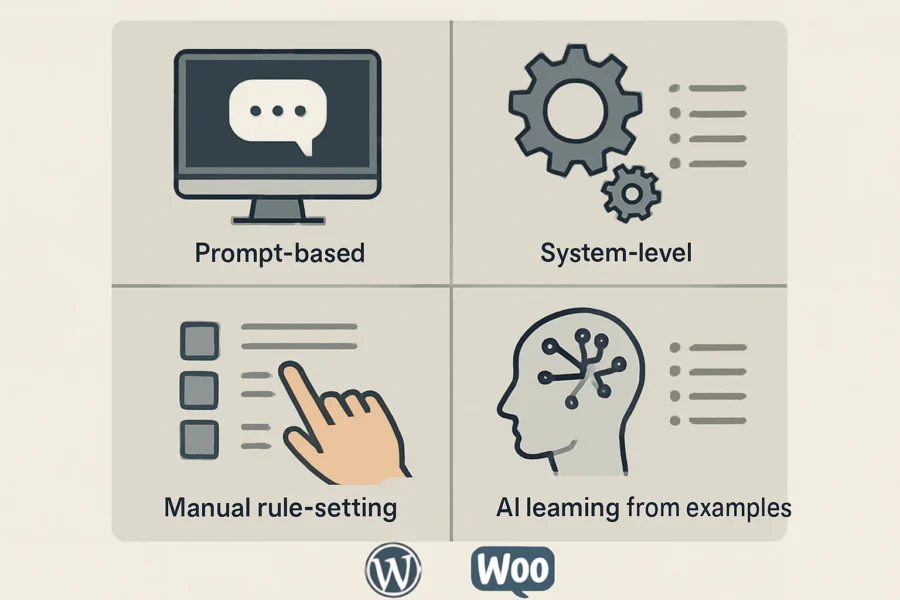
Comparison of Chatbot Brand Voice Customization Methods
| Method | Flexibility | Complexity | Consistency | Suitability for Small Business | WordPress/WooCommerce Integration |
|---|---|---|---|---|---|
| Prompt-Based Customization | Limited – easy to adjust for basic tone and style, but struggles with nuanced or dynamic brand language. | Low – requires only simple instructions or prompt templates. | Moderate – effective for single-session interactions, less reliable for ongoing or complex scenarios. | High – accessible to non-technical users and fast to implement. | Supported in most WordPress AI chatbot plugins and WooCommerce extensions. |
| System-Level Configuration | High – can enforce brand guidelines, vocabulary, and tone across all interactions. | Medium to High – requires setup of persona files, tone rules, or external brand voice documents. | High – delivers more robust, repeatable brand alignment with ongoing maintenance. | Moderate – initial setup may need technical support; ongoing updates recommended. | Available in advanced plugins such as NextlerAI Assistant for WordPress and WooCommerce. |
| Manual Rule-Setting | Moderate – allows explicit control over phrasing and responses, but can be rigid. | Medium – requires mapping common scenarios and writing rules for each. | High for defined cases, low for new or unexpected queries. | Moderate – effective for businesses with documented FAQs and clear tone guides. | Supported in rule-based chatbot plugins, but limited learning capability. |
| AI Learning from Examples | High – adapts to diverse brand language if provided with quality conversational samples. | High – requires curation of training data and regular review for drift. | Variable – improves with more examples but may stray without oversight. | Low to Moderate – often needs external AI tools or services; not all WordPress plugins support this. | Emerging in some premium solutions but not universally available. |
Small businesses should choose customization methods based on their technical resources, brand voice maturity, and the level of conversational nuance required. Prompt-based configuration is fastest for basic needs, but system-level approaches—such as persona and brand guide uploads—offer stronger long-term consistency (source). Manual rules remain valuable for sensitive scenarios where precise phrasing is essential, especially in regulated sectors or when handling complaints. AI learning from examples delivers the most flexibility but demands careful curation and periodic audits, as tone drift or unintended language shifts are possible (source). If you need broader support for AI chatbot integration, consider exploring professional AI automation services. customizing AI chatbots to match your brand voice involves setting clear guidelines and regularly reviewing outputs for consistency.
WordPress and WooCommerce Plugin Considerations
For most small businesses, WordPress and WooCommerce plugin ecosystems provide accessible brand voice configuration tools. Popular plugins like NextlerAI Assistant support both prompt-based and system-level customization, allowing owners to upload brand tone documents, establish persona settings, and test outputs within their website environment (source). Feature depth varies—verify that plugin settings allow for explicit system prompts, persona definition, and easy export/import of brand voice guides.
Implementation Trade-Offs and Decision Criteria
- For rapid deployment or minimal technical skill, start with prompt-based settings and review outputs weekly.
- If maintaining strict brand tone is critical, prioritize plugins with system-level configuration and persona support.
- Manual rule-setting is appropriate for high-risk touchpoints or where legal language is required.
- Adopt AI learning from examples only when you have the resources to supply quality conversational data and regularly audit outputs.
Expert Caution
Regardless of method, always audit chatbot conversations for alignment and risk. Over-reliance on AI for brand voice can introduce subtle errors or inconsistencies, especially as models evolve (source). For advanced automation and auditing solutions tailored to small businesses, see Automation & AI.
Actionable Steps to Define and Implement Brand Voice in Chatbots
-
Audit All Customer-Facing Content
Gather recent emails, website copy, social media posts, and support transcripts. Extract phrases, tone patterns, and stylistic choices that are consistent with your desired brand perception. Identify both language you want to emulate and expressions to avoid. This content audit forms the objective foundation for your brand voice, as recommended by leading AI content strategists (see Glean, Stratos Creative Marketing). To deepen your audit, involve team members from different departments to capture a broad view of your communication style and ensure you’re not missing important touchpoints. Categorize findings by channel to identify variations in tone or language that may need further alignment across platforms. -
Create a Concise Brand Voice Guide
Document key tone characteristics (e.g., formal, conversational, empathetic), preferred vocabulary, and distinctive phrases. Include prohibited words or tones. Structure this guide for use by non-experts; a one-page summary with bullet points and concrete do/don’t examples is sufficient for small teams (see Glean). This guide should be updated as your brand evolves. Consider adding a section with quick reference scenarios, such as how to handle refunds or complaints, to help users apply the guide in real customer interactions. Make the document easily accessible and encourage feedback for continuous improvement. -
Draft Specific Chatbot Instructions with Real Examples
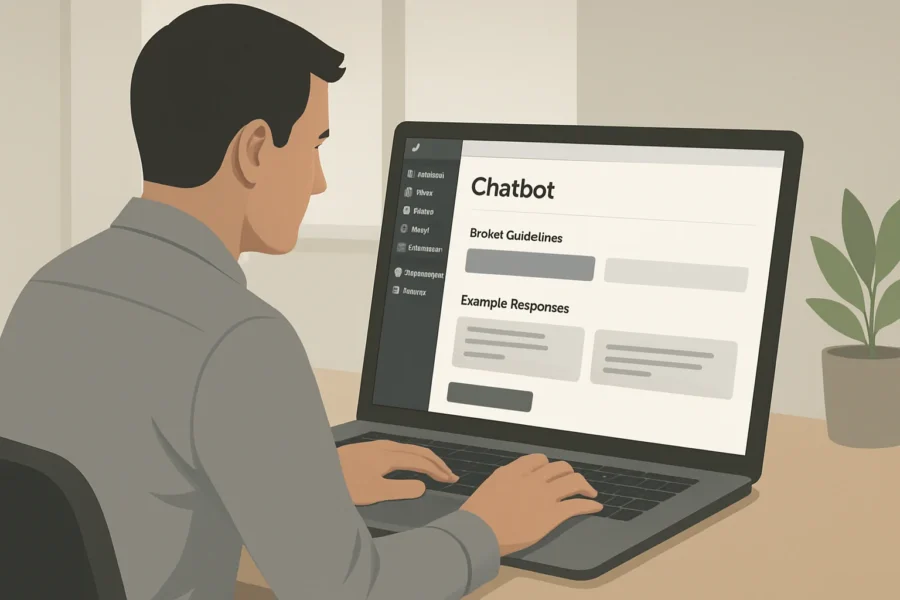
Translate your brand voice guide into chatbot directives. For WordPress or WooCommerce plugins that accept custom prompts, include sample responses and explicit forbidden phrases. Attach both positive (on-brand) and negative (off-brand) examples. AI prompt frameworks like those detailed in AI prompts for customer support can improve clarity and reduce ambiguous outputs. Specify context for each example, such as greeting a new customer or addressing a complaint, so the chatbot’s responses remain consistent in diverse situations. This step helps minimize misinterpretation by the AI and provides a clear template for future adjustments. -
Configure Chatbot Settings on WordPress or WooCommerce
Use your chosen plugin or AI assistant interface to input your tailored prompts and rules. For prompt-based systems, paste your finalized brand instructions into the “system” or “context” fields. For system-level plugins (e.g., NextlerAI Assistant), upload your guide if supported, and adjust tone or fallback escalation settings. Always document what settings were changed, by whom, and why for future audits (see Veebilehed24.ee plugin documentation). Additionally, test the integration in a staging environment before going live to catch technical or content issues early. Ensure access controls are in place so only authorized personnel can update brand voice settings. -
Test Bot Outputs and Iterate
Simulate real customer queries, including edge cases. Review chatbot responses for language, tone, and professionalism. Flag any responses that deviate from your guide. Schedule regular audits—monthly or after plugin updates—and involve at least one person responsible for brand consistency. Adjust prompts or rules as needed, and maintain an ongoing log of changes. This review process is essential to catch subtle brand drift (see Klaviyo, Gleap). Encourage feedback from frontline staff and customers to identify nuanced issues that automated review might miss, and use this input to refine both your brand guide and chatbot logic over time.
Risks, Cautions, and Common Mistakes
- Overly generic prompts lead to bland, off-brand responses—avoid by specifying both style and substance.
- Failing to document changes can hinder troubleshooting and regulatory compliance, especially under evolving AI transparency laws (see EU AI Act).
- Relying solely on automated outputs increases reputational and legal risk: always include human review and escalation for sensitive topics.
Checklist for Maintaining Brand Voice Consistency
- Centralize your brand voice guide and update quarterly.
- Limit chatbot permissions: restrict sensitive or legal content to human operators.
- Document all prompt and setting changes, including rationale.
- Audit sample dialogues at least monthly.
- Stay informed on regional AI regulations affecting automated customer communication (see EU AI Act for European businesses).
WordPress and WooCommerce Chatbot Configuration Tips
Choosing an AI Chatbot Plugin with Brand Voice Controls
The range of available WordPress and WooCommerce AI chatbot plugins varies widely in their ability to support nuanced brand voice. Leading assistants such as NextlerAI Assistant for WordPress and WooCommerce offer granular controls for system prompts and output style, while others restrict customization to a single tone or basic keyword filtering [1]. Decision-makers should compare plugins by their support for prompt templates, response examples, and multi-language capabilities. Evaluate whether the plugin allows role and context instructions, as these are critical for aligning with a unique brand voice and avoiding generic outputs. Drawing inspiration from AI prompts for website copywriting can help you articulate your brand’s tone and language for chatbot responses. A brand voice guide for AI tools can help ensure your chatbot consistently communicates your business’s personality and values. HubSpot's brand voice tools enable users to define and maintain a consistent voice across various customer touchpoints, including chatbots.
Structuring and Inputting Brand Guidelines
Effective brand voice implementation begins with a structured input of documented tone, style, and language rules. Most AI chatbot plugins enable configuration through a system prompt or dedicated brand voice field. Use concrete examples—such as approved greetings, sign-offs, and terminology—to guide the chatbot’s language. For instance, the NextlerAI Assistant allows administrators to paste detailed brand instructions and sample responses directly into its configuration panel, setting a reference for tone and behavior [1]. Business owners should maintain a versioned brand voice document for updates and regulatory compliance.
Ongoing Monitoring and Iterative Refinement
AI chatbot brand tone can drift over time due to model updates or ambiguous instructions. Establish a schedule for reviewing chatbot conversations, focusing on edge cases where tone matters most—such as complaints, refunds, or sensitive inquiries. Use a checklist to audit for alignment with your documented brand rules. Many plugins, including NextlerAI Assistant, support logging and export of chat transcripts for regular review [1]. Assign responsibility for review and escalation, and document corrective actions for non-compliant outputs.
Advanced Configuration Features: NextlerAI Assistant
For businesses seeking advanced controls, the NextlerAI Assistant plugin offers features such as per-page prompt settings, user role–specific instructions, and granular context integration for WooCommerce stores. These enable differentiated responses for customer types (e.g., pre-sale vs. post-sale) and product categories. Decision-makers can implement fallback mechanisms, such as human escalation or compliance warnings, directly within the plugin’s workflow settings. This level of configuration supports consistent brand representation even as business needs evolve [1].
Key Limitations and Risk Controls
No plugin can guarantee perfect brand voice replication. AI models can misinterpret ambiguous guidelines or externalize unintended biases. Legal and reputational risks—especially under the EU AI Act—require periodic review of chatbot configurations, clear documentation of human oversight, and explicit escalation paths for high-risk or regulated conversations [2]. Always combine automated controls with human review, and ensure all changes to chatbot instructions are logged and attributable to specific administrators.
Configuration Checklist for Small Business Chatbots on WordPress/WooCommerce
- Choose a plugin with granular prompt and response controls, such as NextlerAI Assistant.
- Input precise brand guidelines and example responses into the configuration panel.
- Schedule and perform regular audits of chatbot transcripts for tone compliance.
- Assign staff responsibility for chatbot monitoring and corrective action.
- Implement fallback and escalation workflows for edge-case scenarios.
- Maintain version control and change logs of all brand voice settings.
For a deeper analysis of implementation pitfalls and prevention strategies, see Top AI Chatbot Implementation Mistakes on Small Business Sites.
Pros and Cons of AI Chatbot Brand Voice Customization
Advantages: Strategic Value and Operational Gains
- Brand Consistency: Customizing your AI chatbot to follow documented tone and language guidelines provides a uniform customer experience across digital touchpoints. When brand voice elements—such as formality, phrasing, or humor—are systematically encoded into chatbot configurations, customers receive responses that reliably reflect company values and personality . This consistency can also support brand recall and help establish trust, as users are less likely to encounter jarring or off-brand interactions during their journey. For businesses aiming to differentiate in competitive markets, a tailored chatbot voice can reinforce unique selling points and foster loyalty over time.
- Time-Saving at Scale: A well-configured AI chatbot reduces repetitive manual work for support and sales teams. By deploying pre-set response structures and brand-aligned templates, small businesses can serve more customers with fewer resources, especially during periods of high demand.
- Scalable Multichannel Support: Brand voice customization can be propagated across website chat, ecommerce support, and social messaging, enabling small businesses to maintain brand alignment even as channels and customer volumes grow. This ensures that whether a customer interacts via live chat, email, or social platforms, the experience remains harmonized and true to the company’s identity. As a result, businesses can expand their online presence without risking fragmentation of communication style.
- Enhanced Customer Experience: Chatbots that consistently mirror a company’s tone foster trust and credibility. This is particularly impactful for WooCommerce stores, where first impressions and prompt, clear responses can influence purchase decisions . By responding in language that matches customer expectations—be it professional, friendly, or playful—chatbots can defuse potential friction and help guide users smoothly through support or sales funnels.
Disadvantages: Practical and Technical Limitations
- Risk of Tone Drift: Over time, chatbots can deviate from the original brand tone due to updates, plugin changes, or evolving AI models. Without scheduled audits and explicit brand voice guardrails, these shifts may go unnoticed, undermining consistency. Even minor tone changes can confuse repeat customers or dilute the company’s market positioning, making regular monitoring essential.
- Initial Setup Time: Defining tone, building prompt libraries, and configuring plugin settings on WordPress or WooCommerce require significant upfront investment. For small businesses with limited technical capacity, the learning curve can delay deployment. Investing in staff training or external expertise may be necessary to ensure brand voice is implemented effectively from the start.
- Ongoing Oversight Needed: Customization is not set-and-forget. Regular review of chatbot outputs, retraining with new brand voice guidelines, and prompt refinement are necessary to prevent off-brand or confusing conversations. This creates a continuous operational demand. As brand messaging evolves or new products launch, chatbots need to be updated to reflect these changes, requiring dedicated resources over time.
- Technical Constraints: Many chatbot plugins only support prompt-based or template-level adjustments, limiting the depth of customization. Fully replicating nuanced human brand voice—including context-sensitive humor or empathy—remains challenging for current AI models, especially in multilingual environments or where industry jargon is important . Limitations in AI understanding may also result in generic or overly scripted responses that feel impersonal to users.
Decision Framework for Small Businesses
| Factor | Consideration | Action |
|---|---|---|
| Consistency | Is your brand voice clearly documented and translatable into prompt rules? | Formalize tone, language, and style requirements before configuration. |
| Plugin Capability | Does your WordPress or WooCommerce chatbot plugin support detailed customization? | Review plugin documentation for system-level and prompt-based options. |
| Maintenance | Can you dedicate resources for periodic review and updates? | Assign a team member or agency to audit outputs quarterly. |
| Risk Control | How will you detect and correct tone drift or compliance issues? | Implement output sampling and escalation for sensitive topics. |
Regulatory and Reputational Implications
The European Union’s AI Act requires deployers of AI systems—including small businesses using chatbots—to ensure outputs are accurate, non-discriminatory, and aligned with declared business values, with specific obligations for high-risk use cases . Failure to monitor or correct chatbot tone can introduce legal and reputational risks, especially if outputs contradict published policies or mislead customers. Leveraging AI prompts for meta titles and descriptions can further support consistent messaging across your website and chatbot. To boost your brand voice with AI, businesses should focus on using technology as an amplifier rather than a replacement for their established tone.
Myth vs Fact: AI Chatbots and Brand Voice
Separating Assumptions from Reality in AI Chatbot Customization
| Myth | Fact |
|---|---|
| AI chatbots always perfectly mimic your brand voice. | AI responses are highly dependent on the quality and clarity of provided brand guidelines, prompt architecture, and ongoing oversight. Even advanced models can drift from intended tone if not routinely reviewed and refined (see MediaJunction, Gleap). |
| Brand voice customization is once-and-done. | Brand voice alignment requires ongoing review, periodic updates to guidelines, and structured evaluation of chatbot outputs. Static configurations risk tone drift as business messaging and AI models evolve (see Gleap). |
Why AI Chatbot Brand Voice Drifts—and How to Counter It
AI chatbots in WordPress and WooCommerce environments do not inherently “understand” brand voice; they operate within the boundaries of their programmed prompts, system settings, and any supplementary training data. Over time, updates to AI models or plugin architectures, changes in customer queries, and subtle shifts in language usage can all cause chatbots to produce responses that diverge from originally intended tone and style. Without proactive review, this drift may go unnoticed, potentially eroding brand trust or introducing inconsistencies into customer support workflows. Supplementing your chatbot strategy with AI prompts for social media posts helps maintain a unified brand voice across all digital touchpoints. It is possible to keep AI true to your brand voice by leveraging platform features that allow customization and ongoing adjustments.
Checklist: Ongoing Brand Voice Maintenance for AI Chatbots
- Schedule regular transcript reviews: Audit live or test conversations monthly to identify off-brand language or responses.
- Update prompt and system instructions: Revise configuration files or plugin brand voice fields in response to detected drift or evolving messaging priorities.
- Document changes and rationale: Track every update to prompts, tone settings, and chatbot logic for accountability and future reference.
- Involve human reviewers: Assign responsibility for approving significant chatbot script or brand voice changes to a qualified team member.
- Test across scenarios: Evaluate chatbot outputs for both common and edge-case queries, especially after updates to AI models or business messaging.
Decision Criteria: When to Revisit Your Brand Voice Configuration
- Significant product, service, or policy updates that change customer communication needs.
- Customer complaints or feedback indicating confusion or dissatisfaction with chatbot tone.
- WordPress or WooCommerce plugin updates that modify chatbot logic or available customization options.
- Internal rebranding, new marketing campaigns, or shifts in target audience.
- Regulatory changes affecting automated communications (for example, EU AI Act obligations for high-risk use cases).
Limitations: What AI Chatbots Cannot Do Autonomously
Current AI chatbots cannot independently interpret nuanced cultural cues, adapt to unstructured tone shifts, or invent new brand-consistent language in the absence of clear, documented examples. They also cannot monitor their own compliance with legal or reputational requirements. All major sources agree that human oversight and explicit rule-setting are essential to ensure AI responses remain both on-brand and compliant (see MediaJunction, Gleap).
Implementation Guidance for Small Businesses
Treat your brand voice guide as a living document. For WordPress or WooCommerce, leverage plugins that support granular configuration of tone, vocabulary, and fallback escalation to human support. Build review cycles into your operations calendar. Ensure at least one team member is responsible for monitoring and updating chatbot brand voice alignment. For an in-depth breakdown of avoidable errors in small business chatbot deployments, refer to the post on AI Chatbot Implementation Mistakes on Small Business Sites.
Common Mistakes and How to Fix Them
Over-Reliance on Generic AI Prompts
Many small businesses fall into the trap of using canned or default prompts when configuring AI chatbots for brand voice. This approach fails to provide the context or specificity needed for consistent, on-brand communication. To address this, create prompt templates that incorporate your company’s documented tone, terminology, and values. Include explicit instructions and sample responses reflecting your unique brand, as recommended by experts in AI brand voice configuration (Gleap, 2024). Learning from common AI chatbot implementation mistakes can help you avoid pitfalls as you customize your brand voice.
Additionally, avoid one-size-fits-all instructions for different customer touchpoints. Instead, tailor prompts for each key interaction, such as support, sales, or onboarding. Periodically review live chatbot transcripts to ensure real-world responses match your intended brand style. Encourage team members to flag off-brand replies, feeding these back into prompt refinement. This ongoing feedback loop helps maintain authenticity and ensures the chatbot evolves with your brand.
Omitting Updates When Brand Messaging Evolves
Brand voice and messaging evolve as your business grows, launches new services, or pivots strategically. Failing to update chatbot configurations in parallel risks outdated or off-brand responses. Establish a version-controlled process: whenever your brand guidelines change, immediately review and revise your chatbot’s prompt libraries, system-level instructions, and fallback messages. Document update dates and approval steps to ensure traceability.
It’s also important to involve all relevant stakeholders—such as marketing, customer service, and compliance—when updating chatbot messaging. Cross-functional reviews help catch inconsistencies and ensure messaging reflects current business objectives. Integrating chatbot updates into your standard brand guideline revision workflow can streamline this process, reducing the risk of missed updates and keeping all communication channels aligned.
Lack of Scenario-Based Output Testing
Chatbot outputs often drift from the intended brand tone when tested across diverse customer scenarios—especially edge cases or high-stress interactions. Instead of relying on sporadic manual checks, formalize scenario-based testing. Develop a checklist of common customer intents, complaints, and sales queries. Test each scenario quarterly, capturing outputs to flag inconsistencies or lapses in tone. This method surfaces subtle misalignments that generic tests miss (Gleap, 2024).
Consider incorporating anonymized real customer transcripts to expand your scenario library. Include both positive and negative interactions, addressing language use in sensitive situations. Automating portions of this testing can help scale quality assurance efforts, making it easier to monitor for tone drift and ensure consistent brand representation across all user touchpoints.
Failure to Schedule and Implement Regular Reviews
Static chatbot configurations quickly become obsolete. Implement a scheduled review cycle—at minimum, every quarter—aligned with your broader website and content update processes. Assign responsibility to a specific team member or external provider. Use a documented audit framework to compare chatbot outputs against current brand voice standards. For businesses on WordPress or WooCommerce, integrate these reviews with ongoing site updates (see process), ensuring the chatbot evolves with your online presence.
Regular reviews should also cover any new chatbot features or integrations that might impact user experience or communication style. Maintain a log of findings and implemented changes, and share review outcomes with relevant teams. This transparent approach helps identify recurring issues, fosters accountability, and positions your chatbot as a dynamic, brand-aligned asset rather than a static tool.
Practical Checklist: Preventing and Fixing Brand Voice Errors
- Design prompts and system messages tailored to your documented brand tone.
- Link chatbot configuration updates to brand guideline revisions.
- Run scenario-based tests quarterly, covering typical and edge-case interactions.
- Document all changes and responsible reviewers for compliance and traceability.
- Integrate chatbot reviews with regular WordPress or WooCommerce update cycles.
Beyond these steps, encourage ongoing education for team members working with AI chatbots. Staying informed about advancements in AI-driven communications will enable continuous improvement and adaptation to new best practices.
Advanced Caution: Recognize AI Limitations
No configuration eliminates the need for human oversight. AI models can misinterpret context, especially in ambiguous or emotionally charged situations. Maintain a clear escalation protocol for sensitive queries and regularly audit logs to catch emerging issues before they affect customer trust.
In complex cases, consider implementing a human-in-the-loop review for flagged interactions. This ensures sensitive matters are handled with empathy and brand integrity, further protecting your reputation and customer relationships.
Further Reference
For a deeper analysis of technical and operational errors—including integration missteps, inadequate escalation paths, and data privacy lapses—see the dedicated guide on AI Chatbot Implementation Mistakes on Small Business Sites.

Illustrative Scenario: Aligning an AI Chatbot with a Boutique Brand
Brand Voice Blueprint: Boutique Retailer Profile
Consider a hypothetical boutique retailer specializing in sustainable fashion accessories. The brand voice is documented as warm, conversational, and advocacy-driven—prioritizing ethical sourcing, community engagement, and friendly expertise. This voice is detailed in a written guide, capturing preferred greetings, prohibited phrases (e.g., “cheap” or “fast fashion”), and explicit tone rules. Such detailed documentation is essential before any chatbot configuration can begin, as recommended by Stratos Creative Marketing’s approach to AI brand voice alignment. The guide also includes situational tone adjustments, such as adopting a more empathetic approach when addressing customer concerns about sustainability or returns. By mapping out not just what to say, but how to say it, the retailer ensures every customer touchpoint feels consistent and authentic. This level of clarity helps prevent ambiguity for both the chatbot and any human agents referencing the documentation.
Stepwise Alignment: From Guidelines to AI Outputs
- Document Brand Voice: The business owner distills the brand’s values and tone into a concise, operational guide. This includes specific language to use or avoid, sample responses for common customer queries, and a rationale for each rule. These materials serve as the primary input for chatbot customization. The guide may further outline preferred levels of formality, how to address eco-friendly practices, and instructions for handling sensitive topics in keeping with the brand’s advocacy stance.
- Configure the Chatbot Platform: Using a WordPress-compatible plugin—such as those offering system prompt fields or advanced persona settings—the owner embeds the documented rules and sample outputs directly into the chatbot’s base configuration. For WooCommerce, additional prompts are set for product inquiry flows, ensuring the bot never deviates into off-brand promotional language. The configuration process often involves collaboration between marketing and technical staff, translating nuanced brand attributes into actionable chatbot instructions and fallback protocols when the AI is uncertain.
- Test with Scenarios: The team prepares a battery of real customer questions, including edge cases (e.g., sustainability policy concerns or sensitive returns). Each response is reviewed for tone, accuracy, and language consistency with the documented guide. Issues are flagged for prompt revision or escalation to human support. Testing may include both automated evaluation tools and manual team reviews, allowing for ongoing refinement and surfacing subtle inconsistencies that could impact customer trust or satisfaction.
Iterative Review: Sustaining Brand Alignment Over Time
Monthly, the owner audits a sample of live chatbot conversations using a structured checklist: Does the response reflect the desired advocacy tone? Are any prohibited terms present? Is nuance lost in automated replies? When deviations are found, prompt instructions are clarified, and the chatbot’s configuration is updated accordingly. This review process is essential for minimizing drift and maintaining authenticity, as emphasized in current AI brand voice literature. Over time, the audit can reveal emerging patterns in customer queries or shifts in brand priorities, prompting updates not only to chatbot prompts but also to the overall brand voice guide. Involving customer service staff in the review helps capture real-world insights and ensures that the AI’s communication remains closely aligned with how the brand wants to be perceived.
Implementation Checklist for Small Businesses
- Maintain a living brand voice document with concrete do/don’t rules.
- Embed guidelines directly into system prompts or persona settings of the chatbot plugin.
- Test AI outputs regularly with realistic, brand-specific scenarios.
- Schedule recurring audits of chatbot transcripts for tone and compliance.
- Continuously update configuration based on real customer interactions and team feedback.
This scenario demonstrates that, while AI chatbots can be closely aligned with a small business’s brand voice, sustained results require disciplined documentation, iterative testing, and regular human oversight—especially on WordPress and WooCommerce platforms. For additional operational automation frameworks, see AI automation examples for small businesses.
Limitations
AI Chatbot Brand Voice: Inherent Constraints
Even with thorough documentation and precise configuration, current AI chatbots on WordPress and WooCommerce platforms cannot fully replicate the subtlety and intuition of human communication. AI models interpret brand tone using structured prompts and examples, but their responses rely on pattern recognition—not genuine understanding of context or emotion. This results in occasional inconsistencies, especially in nuanced or sensitive customer interactions, regardless of the quality of your brand voice guide [see: “How to create a brand voice guide for AI tools”]. Furthermore, chatbots can struggle with context shifts and may miss cultural references, sarcasm, or indirect cues that a human agent would naturally recognize. This limitation is particularly relevant for brands that rely on humor, storytelling, or highly personalized outreach. As AI language models are fundamentally statistical, they may also default to generic phrasing when faced with uncertainty, which can weaken your brand’s distinctiveness over time. Continuous prompt refinement and real-world scenario testing can mitigate some issues, but cannot fully overcome the lack of true conversational intuition. Compliance with regulations like the EU AI Act is important when deploying AI chatbots, as these rules set guidelines for safe and ethical use.
Plugin Architecture and Platform-Specific Limits
Most WordPress AI chatbot plugins—including those with WooCommerce support—offer fixed customization fields for tone or style, typically through prompt templates or limited system instructions. They rarely support deep model retraining or organization-wide language rules. As a result, any update to your brand voice may require manual prompt changes across multiple plugin settings, increasing maintenance overhead and risk of drift. Some platforms restrict how much historical data or example dialogue can be provided, further limiting personalization depth [see: “Customizing AI Chatbots to Match Your Brand Voice – Gleap”]. Additionally, plugin updates or API changes can sometimes overwrite customizations, requiring vigilant version control and regular revalidation of settings. Integration limits may also affect multi-channel consistency if your chatbot is deployed across web, social, and messaging platforms.
Auditing and Oversight Challenges
Automated audit and correction tools for chatbot outputs remain limited. While scheduled reviews and manual transcript checks are essential, few solutions provide granular analytics on brand alignment or flag subtle tone mismatches. This means small businesses must dedicate internal resources or seek expert support for periodic audits to prevent gradual erosion of brand consistency. Automated escalation to human agents is possible, but its effectiveness depends on clear handoff rules and prompt monitoring [see: “How we taught our AI agent to speak your brand’s language – Klaviyo”]. Moreover, as conversational data accumulates, identifying trends or recurring misalignments often requires custom reporting or third-party tools, adding complexity to oversight. Lags in review cycles can allow problematic outputs to persist unnoticed, risking customer dissatisfaction or reputational damage.
Legal, Regulatory, and Reputational Boundaries
European businesses deploying AI chatbots must comply with the EU AI Act’s risk-based obligations, which require transparency, documentation, and ongoing risk assessment for systems that interact with the public [see: “AI Act | Shaping Europe’s digital future”]. Even with strong controls, AI chatbots may inadvertently generate off-brand or non-compliant statements. Ultimate accountability remains with the business owner (the deployer/controller), not the technology provider or plugin developer. A misaligned chatbot response can lead to reputational harm or regulatory scrutiny, especially if it delivers misleading, discriminatory, or unauthorized advice. Businesses must also ensure that chatbots do not inadvertently process or store sensitive personal data in violation of GDPR or other privacy regulations, making regular legal review and data management policies essential.
Strategic Considerations: Human and AI Roles
Relying exclusively on AI to represent your brand voice is inadvisable for high-stakes or complex customer scenarios. AI excels in handling routine queries with predefined tone, but edge cases, complaints, or requests for nuanced advice should always escalate to qualified human staff. Building clear escalation logic and training staff to monitor chatbot performance are non-negotiable controls for maintaining trust and compliance in digital customer communication. Regular cross-training between human agents and AI systems can enhance both performance and consistency, ensuring that unique cases are handled appropriately and that chatbot learning is aligned with evolving brand and compliance requirements.
Expert Caution
Guardrails for Brand Voice in AI Chatbots
Business owners must recognize that even the best-configured AI chatbot on WordPress or WooCommerce cannot independently distinguish between subtle brand tone variations and context-sensitive language. Setting clear boundaries is not optional: implement rule-based escalation to human agents for complaints, legal queries, or high-sensitivity topics. Document escalation triggers and review them quarterly, as plugin and AI model updates may shift chatbot behavior in ways that are not transparent in admin logs.
To further strengthen guardrails, create a taxonomy of conversation types and specify which require mandatory human handoff. For example, interactions involving personal data requests, refund disputes, or negative sentiment should be flagged for escalation. Train staff on recognizing escalated cases and ensure your chatbot’s escalation logic is updated alongside any policy changes. Regularly communicate process changes to your team, as inconsistent handoffs can erode customer trust and introduce compliance gaps. Consider providing users with a clear option to request a human agent at any time, which not only aligns with best practices but may also be required under consumer protection regulations.
Frameworks Over Intuition: Systematic Brand Voice Enforcement
Reliance on intuitive prompt tweaks is insufficient for brand tone consistency. Establish a documented framework specifying approved greetings, closings, style rules, and forbidden phrases. Integrate these into system prompts and, where supported, plugin-level configuration fields. For WooCommerce, define product-specific tone adaptations (such as differentiating between luxury and value segments) using explicit context parameters, rather than assuming AI interpretation. Audit outputs monthly against this framework using real customer conversations, not just test scripts.
This framework should be accessible to all relevant stakeholders, including marketing, compliance, and customer support teams. Regularly update it to reflect evolving brand guidelines or changes in product positioning. Implement feedback loops where customer-facing staff can report inconsistencies, enabling continuous improvement. Where technically feasible, leverage plugin features that support version control or change tracking for prompt configurations, reducing the risk of accidental drift from approved standards.
AI Model and Plugin Drift: Hidden Risks
AI models powering WordPress chatbots can be updated by providers without advance notice, subtly changing output tone or default phrasing. Plugin updates may also override or reset brand customizations. To mitigate this, maintain versioned backups of prompt configurations and brand voice documents. After any update, conduct regression testing of chatbot responses to critical customer scenarios and document any deviations from approved tone or style.
Proactively subscribe to provider update notifications and review changelogs for both AI models and plugins. Develop a checklist for post-update validation, covering not only tone but also compliance with any industry-specific communication standards. If feasible, use staging environments to test updates before deploying to production. Assign responsibility for update monitoring to a designated team member to ensure timely detection and resolution of unintended changes.
Legal and Reputational Exposure in Automated Brand Communication
Automated brand representation introduces legal and reputational risks. In the EU, the AI Act (as of 2024) places explicit obligations on deployers of public-facing chatbots to ensure transparency, risk controls, and human oversight (see official guidance). Failure to align chatbot outputs with documented brand and compliance requirements can expose small businesses—as both deployers and data controllers—to fines or complaints. Always clarify with your plugin provider what logs, audit trails, and override capabilities are available to meet regulatory needs.
Beyond regulatory requirements, clearly disclose to users when they are interacting with an AI, as transparency fosters trust and may be legally mandated in some jurisdictions. Review your chatbot’s privacy notice and consent flows to ensure they reflect actual data usage. Establish clear incident response procedures for handling unintended disclosures or problematic outputs, and document all remediation efforts to demonstrate compliance if challenged by regulators or dissatisfied customers.
Over-Reliance: The Critical Role of Human Oversight
Do not assume that well-configured AI chatbots eliminate the need for ongoing human monitoring. Schedule periodic reviews with both customer-facing staff and management to identify off-brand responses and update framework documents accordingly. Consider third-party audits or peer reviews for high-risk scenarios. Overconfidence in AI brand voice reproduction can lead to brand dilution or communication errors that are only detectable through direct human evaluation.
Establish key performance indicators (KPIs) for chatbot interactions, such as customer satisfaction scores or escalation rates, and monitor them over time to surface potential issues. Encourage continuous staff training to keep human reviewers updated on both brand messaging and evolving AI capabilities. Where possible, integrate user feedback mechanisms within the chatbot to capture real-time concerns about tone or accuracy, feeding these insights back into your review cycle for targeted improvements.

FAQ
How can a small business define its brand voice for AI chatbots?
Begin by documenting your brand’s preferred tone, language, and key messaging using a clear, written style guide. Analyze your most effective customer communications—such as top-performing emails or chat transcripts—to identify patterns in vocabulary, formality, and emotional tone. Translate these findings into explicit rules and examples for chatbot prompts, including phrases to use and avoid. This guide should be updated after each audit or rebranding to ensure ongoing alignment with business values and customer expectations. Involve team members from marketing, sales, and customer service to gather well-rounded insights about customer touchpoints. Consider developing sample dialogues that reflect typical user scenarios, which helps clarify how the brand voice should adapt to different contexts. Small businesses should also evaluate competitor chatbots to identify differentiators and ensure their own voice stands out. Finally, include guidance for handling sensitive topics and escalation protocols within your documentation, so the AI reliably reflects your company’s approach in challenging interactions.
What configuration options are available for customizing chatbot responses on WordPress/WooCommerce?
WordPress and WooCommerce support several configuration layers: prompt-level instructions, system-wide tone settings, scenario-based rules, and plugin-specific options. Many plugins, such as NextlerAI Assistant, allow you to input brand tone statements, upload sample conversations, and set escalation triggers for sensitive topics. For granular control, use conditional logic to adjust responses by page, user action, or product type. Always document configuration changes to maintain traceability and support compliance reviews.
What are the most common mistakes when implementing AI brand voice?
Frequent errors include relying on single-sentence prompts, neglecting to provide negative examples, and failing to schedule regular output reviews. Many businesses overlook the need to update chatbot instructions after a brand refresh or regulatory change. Another risk is assuming plugins will interpret vague tone guidelines accurately; without explicit, scenario-based rules, chatbots default to generic language. For a deeper analysis of implementation pitfalls, see Top AI Chatbot Implementation Mistakes on Small Business Sites.
How can business owners audit and refine chatbot outputs for brand consistency?
Establish a recurring review process involving both automated and manual spot-checks. Use transcript sampling to compare chatbot responses against your documented brand guide. Tag deviations by severity and frequency, and log them for follow-up. Refine prompts and system instructions where drift is detected, and implement a feedback loop so staff can flag off-brand responses in real time. Update your chatbot configuration after each audit to prevent recurrence of specific issues.
What are the limitations of current AI chatbots in capturing brand voice?
AI chatbots struggle with highly nuanced humor, cultural references, and context-specific empathy, especially in sensitive service scenarios. Plugin architectures may limit the depth of brand instruction that can be encoded. Even with advanced prompt engineering, AI models can generate inconsistent tone when faced with ambiguous or multi-turn queries. These limitations require documented fallback rules and mandatory human intervention points for complex or high-risk interactions.
Are there risks in letting AI chatbots represent your brand?
Legal and reputational risks include miscommunication, spreading outdated information, and non-compliance with sector-specific regulations. Under the EU AI Act, businesses deploying public-facing chatbots are responsible for clear disclosure and must ensure that AI outputs do not mislead users or violate privacy rules (see the official European Commission overview). To mitigate risk, configure explicit escalation paths, maintain up-to-date documentation, and require human review for high-sensitivity conversations.
Conclusion
Customizing an AI chatbot to reflect your small business brand voice on WordPress or WooCommerce requires more than initial configuration. After defining and implementing brand guidelines, the next action is to formalize a recurring review cycle. Assign a responsible team member or agency to audit chatbot interactions monthly for tone drift, regulatory compliance, and unresolved customer intent. This step is essential because AI-driven brand voice can subtly change due to model updates, plugin changes, or evolving customer language, and these shifts are rarely flagged by the tools themselves.
Establish a structured incident response plan for escalations. Document which types of customer queries must trigger human intervention and ensure these rules are embedded in your chatbot’s configuration. For WooCommerce and WordPress, verify that escalation triggers are tested in real purchase, complaint, and refund scenarios. This not only reduces the risk of reputational harm but also fulfills emerging legal requirements for human oversight in high-risk use cases under the EU AI Act and similar regulations worldwide.
Additionally, consider ongoing training for staff to stay updated on best practices for AI moderation and compliance. Encourage regular feedback collection from both customers and team members who interact with the chatbot, as this can reveal subtle issues or opportunities for improvement not captured in technical audits. Supplement automated logs with periodic manual reviews to catch nuanced communication missteps. As your product offerings, audience demographics, or legal obligations shift, promptly update chatbot scripts and response patterns to maintain alignment with your evolving brand identity and customer expectations.
Finally, map your brand voice documentation and chatbot prompt rules to a secure, version-controlled location accessible by all relevant stakeholders. Institute a formal change log for any brand, regulatory, or technical updates impacting your chatbot’s configuration. Where possible, leverage available plugin features for audit trails and external review by legal or marketing experts. This proactive governance ensures your AI chatbot remains a true extension of your business identity and customer experience as your operations and regulations evolve.